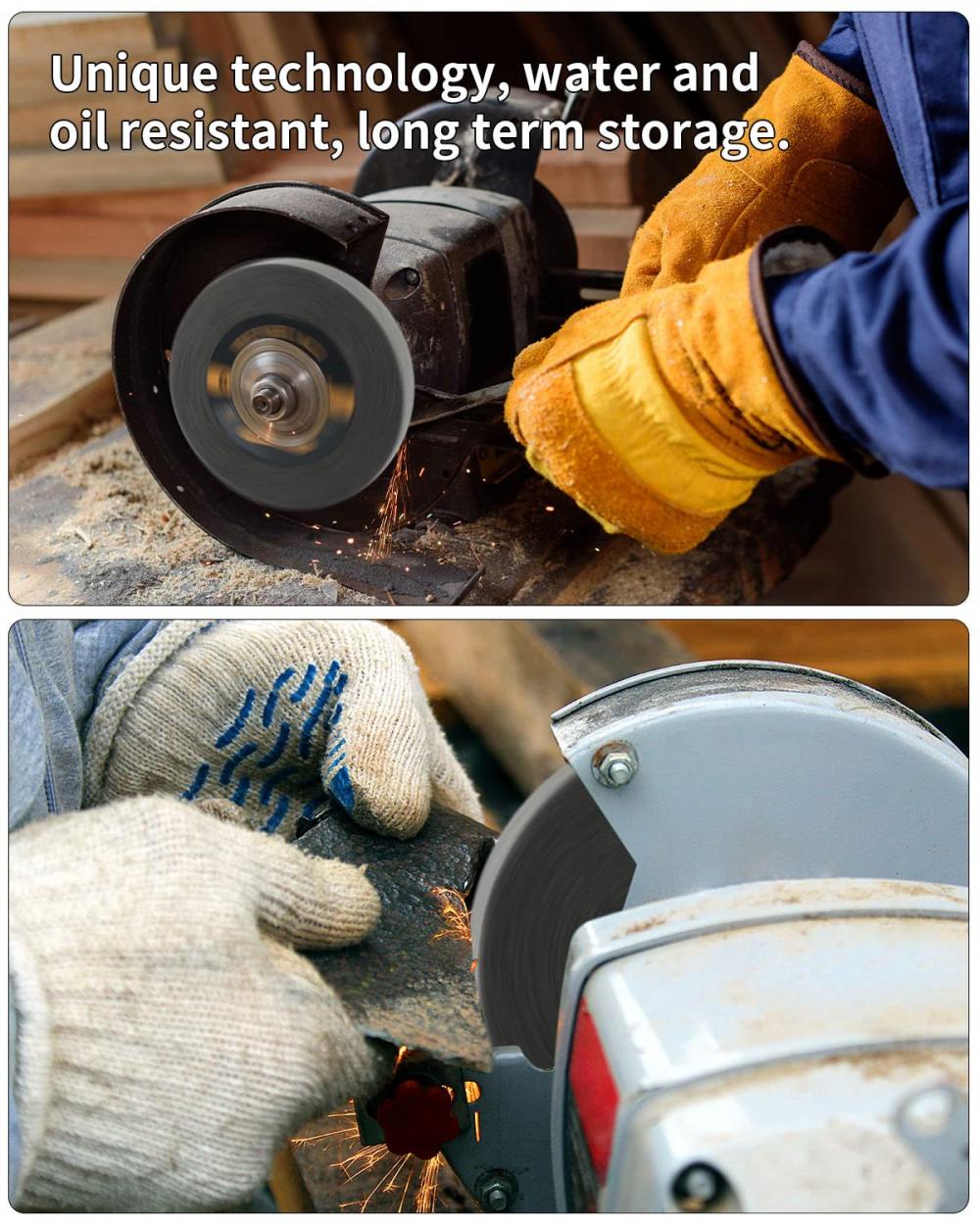
Polishing wheels, like sanding discs, sand paper, and abrasive belts, are essential grinding tools in various industries and are used to obtain smooth, polished, or finished surfaces on different materials. They are usually mounted on power tools to remove surface blemishes, rust or paint, and enhance the overall appearance of the workpiece. Polishing wheels come in different types and materials, each designed for specific applications and surface treatments.
Types of polishing wheels
There are several types of polishing wheels, each with different characteristics and uses:
Nylon polishing wheels
Material: Made of nylon fibers impregnated with abrasive particles.
Features: The open weave structure of nylon polishing wheels provides good flexibility and controlled wear, reducing the risk of over-grinding or damage to the workpiece. They are also resistant to clogging, which helps maintain a consistent finish over long-term use.
Applications: Ideal for light deburring, rust removal, surface finishing, and cleaning applications on a variety of materials, including metals, plastics, and wood.
Non-woven polishing wheels
Material: Made of a combination of non-woven synthetic fibers and abrasive particles.
Features: These wheels provide a uniform finish and are less aggressive than traditional grinding wheels. They are ideal for blending, polishing, and finishing surfaces without changing the dimensions of the material.
Applications: Used for surface preparation, finishing, blending welds, and removing oxides, rust, or paint from metals such as aluminum, stainless steel, and brass.
Wire Brushed Polishing Wheels
Material: Made from multiple layers of wire mesh, typically steel or brass.
Features: Wire Brushed Polishing Wheels provide a rough finish and are designed for heavy-duty cleaning, deburring, and removing mill scale, rust, and paint from hard surfaces. They provide aggressive action while maintaining the integrity of the workpiece.
Applications: Suitable for metal surfaces, especially removing mill scale and corrosion from iron and steel, and preparing surfaces for painting or coating.
Flap Polishing Wheels
Material: Made from overlapping emery cloth or sandpaper (flap).
Features: Flapped polishing wheels provide a consistent finish, combining the cutting action of a grinding wheel with the fine polishing ability of a polishing disc. The flange wears evenly, exposing a new layer of abrasive, ensuring a consistent cut and finish.
Applications: For sanding, grinding, blending, deburring and finishing applications on metals, wood and plastics.
Strip Disc Polishing Wheels
Material: Made from a web of coarse nonwoven fibers bonded with resin.
Features: Strip discs effectively remove paint, rust and adhesives without damaging the workpiece surface. They provide a strong but controlled abrasive action.
Applications: Suitable for surface preparation, paint and rust removal, and cleaning welds on materials such as stainless steel, aluminum and wood.
Purposes of Polishing Wheels
Polishing wheels are a versatile tool that can be used in a variety of industries and applications:
Metalworking: Polishing wheels are widely used in metalworking to clean, deburr and polish metal surfaces, remove oxides, and prepare surfaces for further processing such as painting or coating.
Automotive: In the automotive industry, these wheels are used for surface preparation, paint removal, polishing body panels and restoring the original sheen of metal parts.
Woodworking: Polishing wheels are used for sanding and finishing wooden surfaces, smoothing edges and preparing wood for staining or painting.
Jewelry Making: Polishing wheels help achieve a high gloss finish on precious metals and gemstones, remove minor scratches and restore shine.
Aerospace: In the aerospace industry, these wheels are used to finish components, remove burrs and maintain the integrity and appearance of metal parts.
Conclusion
Polishing wheels are a versatile tool that come in a variety of materials and constructions to suit different applications and industries. Whether it’s light polishing, heavy rust removal or surface preparation for paint, there is a polishing wheel to meet specific needs. Understanding the different types and uses of polishing wheels can help you choose the right tool for your task, ensuring optimal performance and superior polishing results.