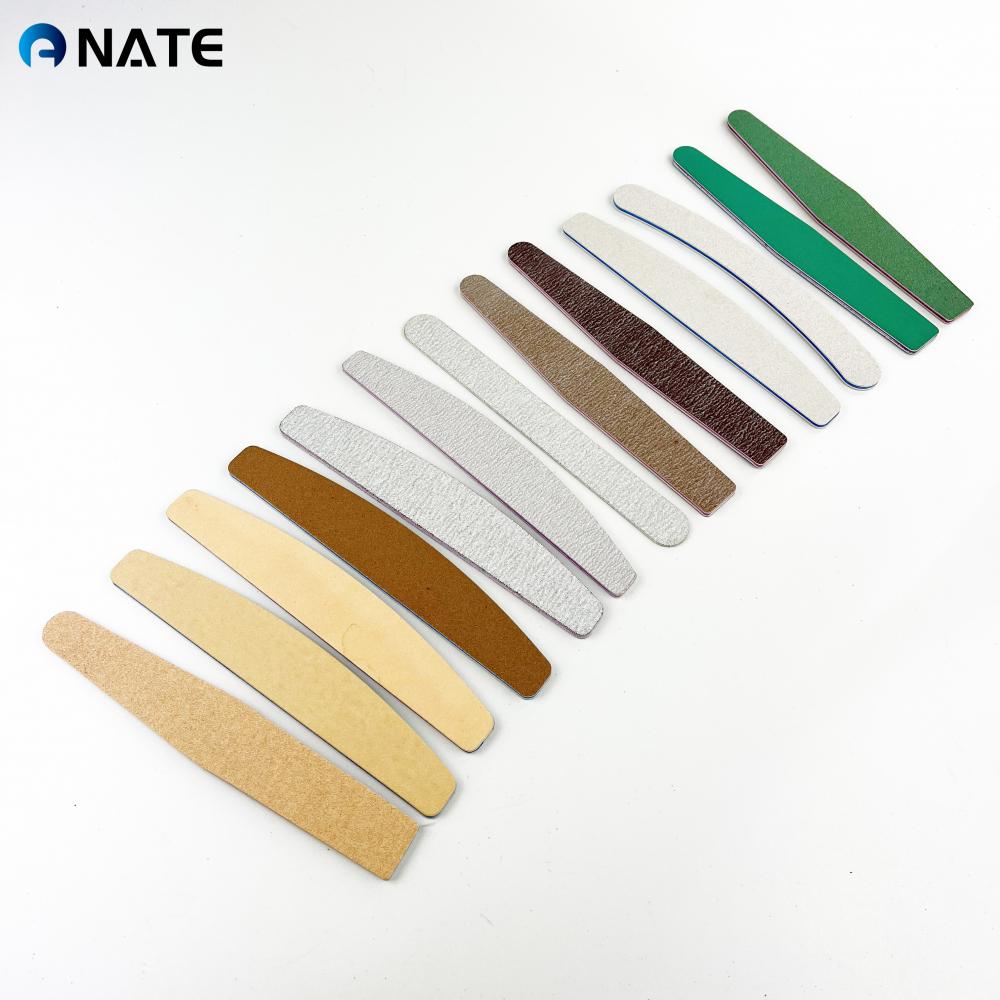
Keyword: Nail File Sandpaper、Sand Paper、Nail File Sandpaper Roll、Zebra Nail File Sandpaper、Nail File Sandpaper Sheet
In today's beauty and personal care industry, nail file sandpaper plays an important role. Whether for professional manicurists or home users, this essential nail art tool is essential for daily nail care. But have you ever wondered how this seemingly simple product is made? This article takes an in-depth look at the manufacturing process of nail file sandpaper and its wide range of applications.
1. Manufacturing process of nail file sandpaper
1. Selection and preparation of raw materials
The quality of nail file sandpaper is directly affected by its raw materials. Manufacturers usually choose silicon carbide sandpaper or aluminum oxide sandpaper as raw materials, which are well-known for their excellent abrasive performance and durability. In addition, the backing material is usually made of high-strength C-wt latex paper, which has good flexibility and tear resistance.
2. Backing material treatment
Before starting production, the backing material is cleaned and pre-treated. This process ensures that the surface is free of impurities, which helps to achieve a uniform coating of abrasive later. After treatment, a strong adhesive is applied to the backing to enhance the bonding between the abrasive and the backing.
3. Abrasive Coating
Applying abrasives is a critical step in the manufacturing process. Manufacturers select the appropriate grit size (e.g. P100, P120, P150, P180, P240) for different intended uses. Advanced coating technology is used to evenly distribute the abrasive on the backing material. The coating can be full coverage or partial coverage, depending on the desired abrasive application.
4. Cutting and Forming
After coating, the sandpaper is cut into standard sizes, such as 190mm x 280mm, or customized according to customer requirements. This step ensures that the product is portable and user-friendly.
5. Quality Control
Before leaving the factory, all nail file sandpapers undergo strict quality control inspections. The manufacturer's quality inspection department evaluates the sandpaper's sanding performance, durability, and safety to ensure its effectiveness and reliability during use.
II. Applications of Nail File Sandpaper
Nail file sandpaper has a wide range of uses and is a versatile tool:
1. Nail Art Industry
Manicurists use nail file sandpaper to provide professional nail trimming and touch-up services. Fine sandpaper helps create a smooth nail surface, making polishing and decoration easier.
2. Home Care
Many home users have realized the importance of nail sandpaper in personal care. Regular filing of nails not only keeps nails neat, but also prevents nails from cracking and breaking.
3. Furniture Renovation and Woodworking
In furniture manufacturing and renovation, nail sandpaper is widely used to sand wood surfaces to ensure a smooth surface before painting. Woodworkers often rely on this sandpaper for fine sanding to achieve a high level of craftsmanship.
4. Crafts
Artists and amateurs use nail sandpaper to perfect various wooden crafts, enhancing beauty and texture. In creative projects, fine sanding can enhance the professionalism of the finished product.
5. Other Industry Applications
Nail sandpaper can also be applied to leather products, plastics and other materials, showing its diverse uses. Whether in industrial settings or personal care, nail sandpaper can effectively meet various needs.
III. Conclusion
The manufacturing process of nail sandpaper may seem simple, but each step is critical to ensure product quality and performance. As the beauty and personal care industry continues to grow, the demand for nail sandpaper remains strong, and its application range expands to multiple fields. Whether for professional manicurists or individuals focusing on self-care, nail sandpaper will continue to be an indispensable tool that provides users with an excellent experience.