1. Product Overview
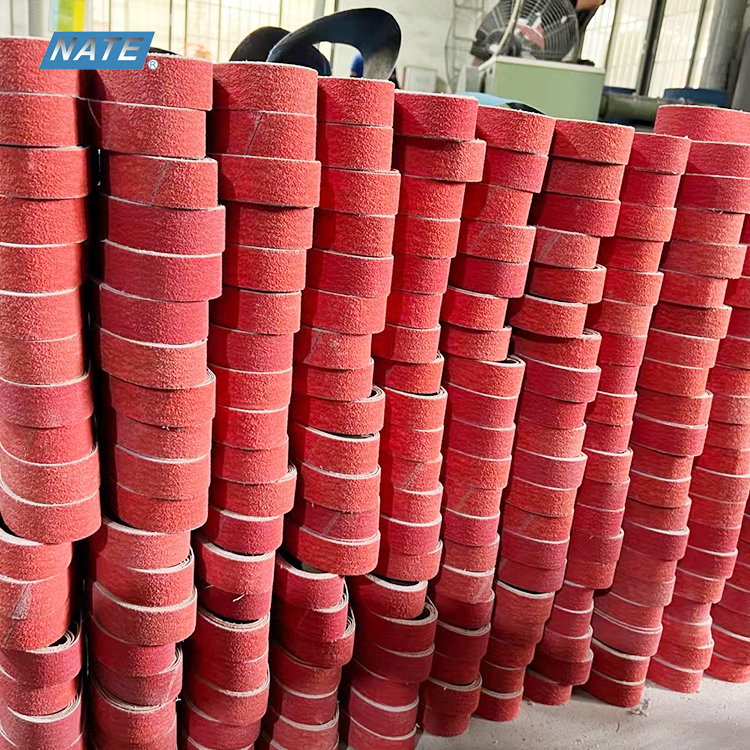
Abrasive belts are flexible sanding tools composed of abrasive grains, backing materials, and bonding agents. Known for their high material removal efficiency and versatility, abrasive belts are indispensable in modern industrial production, widely used for grinding, polishing, and surface finishing.
2. Product Classification
By Abrasive Type:
Aluminum Oxide Abrasive Belt: Cost-effective, ideal for wood and general metal processing.
Zirconia Abrasive Belt: Suitable for high-strength materials like stainless steel and cast iron.
Ceramic Abrasive Belt: Designed for extremely hard surfaces and heavy-duty grinding.
Silicon Carbide Abrasive Belt: Preferred for non-metallic materials such as glass, ceramics, and plastics.
By Backing Material:
Cloth Backing: Highly durable and suitable for heavy grinding.
Paper Backing: Smooth surface, ideal for fine polishing.
Combination Backing: Combines the strengths of cloth and paper, offering enhanced versatility.
By Form Factor:
Narrow belts: Used with handheld tools or small equipment.
Wide belts: Commonly employed in woodworking and large-scale metal processing.
Seamless belts: Essential for continuous production lines, eliminating joint interference.
3. Application Scenarios
Metalworking: Surface grinding, weld seam removal, and polishing of stainless steel and aluminum alloys.
Woodworking: Furniture production, flooring finishing, and decorative panel sanding.
Automotive Repair: Vehicle body sanding, paint preparation, and rust removal.
Special Materials: Polishing and finishing of plastics, ceramics, and glass surfaces.
4. Market Analysis
Technological Trends:
Ceramic abrasive belts are gaining market share due to superior cutting efficiency and durability.
Low-dust and eco-friendly abrasive belts are increasingly favored, aligning with sustainability goals.
Industry Scale:
The global abrasive belt market is experiencing steady growth. By 2023, it was estimated to surpass $8 billion, with a compound annual growth rate (CAGR) of 5-6%.
Geographic Distribution:
Asia-Pacific: The largest market, driven by manufacturing hubs in China, India, and Southeast Asia.
North America and Europe: Growing demand for high-performance abrasive belts in automotive and aerospace industries.
5. Key Advantages
High Efficiency: Rapid material removal and reduced production time.
Versatility: Adapts to various shapes and complex surfaces.
Customization: Wide range of sizes, grit types, and forms to meet specific needs.